1. Working Principle — Spectrophotometric Colorimetric Method
The Asmik Online Nitrite Nitrogen Water Quality Analyzer employs a well-established spectrophotometric colorimetric conversion method to detect nitrite ions (NO₂⁻) in water samples with high precision and reliability. This method is widely recognized in environmental monitoring standards for its accuracy and reproducibility.
Reaction Process
The detection follows a two-stage chromogenic reaction to produce a measurable color signal:
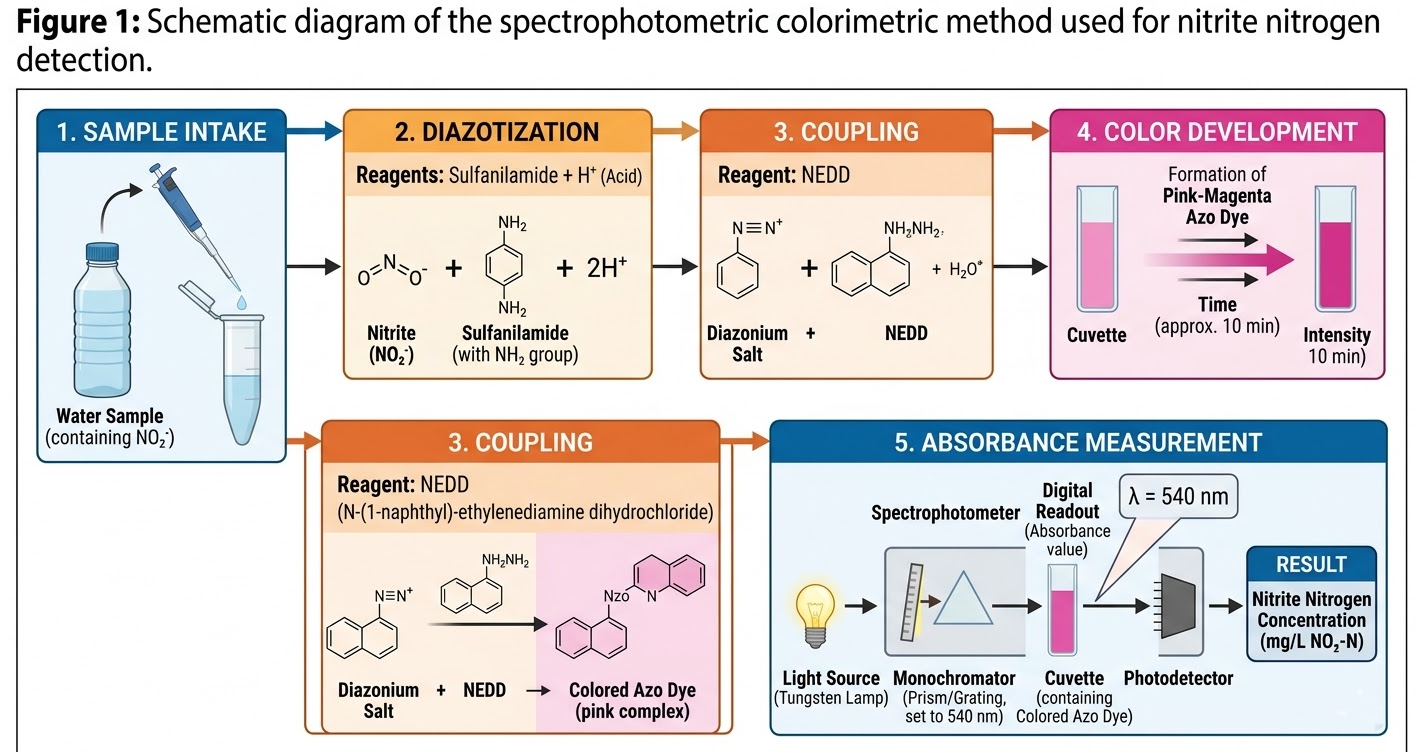
The double optical path detection design is a key advantage. By simultaneously measuring both a reference and a sample optical path, the analyzer calculates absorbance in real-time. This effectively eliminates interference from ambient light changes, light source aging, and detector drift — ensuring long-term measurement stability without frequent recalibration.
2. Key Features of the Asmik Analyzer
The Asmik nitrite nitrogen analyzer is engineered for high reliability, full automation, and minimal maintenance in demanding field environments. Below are the core features that set it apart:
Low Reagent Consumption
Each measurement consumes less than 2 mL of total reagents, significantly lowering operational costs and reducing reagent replacement frequency.
Double Optical Path
Real-time absorbance calculation through simultaneous reference and sample optical paths eliminates external environmental interference.
Auto Turbidity Compensation
Automatically compensates for water turbidity to reduce measurement interference and improve accuracy in turbid samples.
7-inch Touch Screen
Linux-based interface with full network support (IPv4/IPv6, TCP/IP), USB and TF card connectivity for easy data export.
Smart Range Switching
Automatic dilution and range switching for high-concentration samples, with built-in alarms for reagent and sample supply levels.
Waste Separation
Toxic and cleaning wastewater are automatically separated. Each stream produces less than 15 mL per measurement for safe disposal.
3. Technical Parameters & Specifications
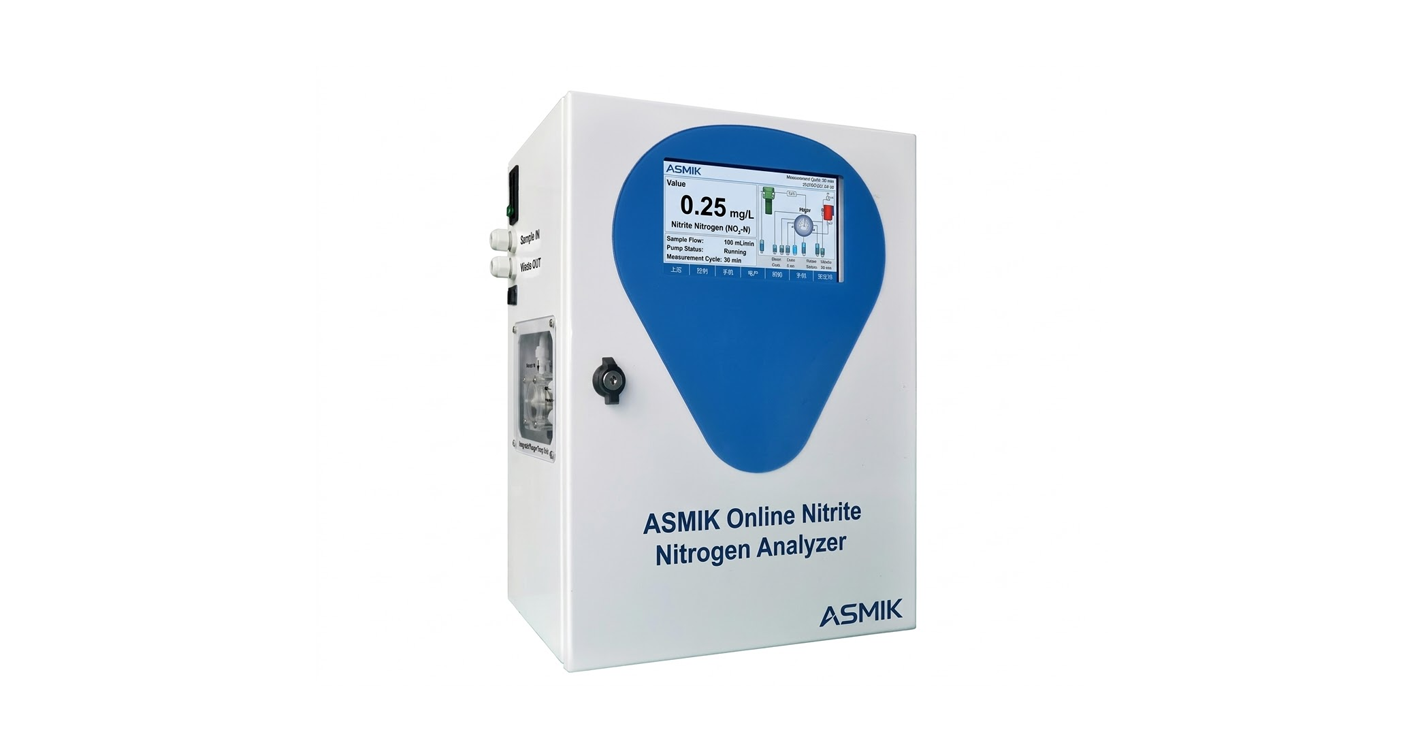
The following table details the full technical specifications of the Asmik Online Nitrite Nitrogen Analyzer. These parameters define the analyzer's measurement capability, accuracy, communication options, and environmental requirements.
| Parameter | Specification |
|---|---|
| Measuring Range | (0–0.2 / 0.5 / 2 / 5 / 10) mg/L |
| Measurement Error | ±10% |
| Repeatability | ≤3% |
| Zero Drift | ±5% F.S. |
| Span Drift | ±5% F.S. |
| Min. Maintenance Period | ≥168 hours / time |
| Digital Communication | RS232, RS485, RJ45 |
| Analog Communication | (4–20) mA input / output |
| Power Requirements | (220 ± 22) VAC; (50 ± 1) Hz |
| Ambient Temperature | 5–40 ℃ |
| Dimensions (W × H × D) | 300 × 420 × 240 mm |
| Weight | < 15 kg |
4. Application Scenarios
Thanks to its robust design, low maintenance requirements, and automated operation, the Asmik nitrite nitrogen analyzer is suitable for deployment across a wide range of water quality monitoring environments:
5. FAQ: What Causes Sudden Nitrite Spikes?
Sudden spikes in nitrite nitrogen readings are one of the most common concerns for operators using online analyzers. These spikes can trigger various system alarms. Understanding the root causes is essential for distinguishing between genuine environmental changes and instrument-related anomalies.
Possible Causes & Associated Alarm Codes
Actual Environmental Spikes
The spike may be a genuine reading — the actual nitrite concentration in the water body has exceeded the preset discharge standard or environmental limit. This often occurs due to upstream industrial discharge events, sudden organic pollutant loads, or seasonal changes affecting nitrification processes. Always cross-check with grab samples before dismissing as a false alarm.
Water Sample Interference
Severe interfering substances or extreme turbidity in the water sample can disrupt the colorimetric reaction, leading to abnormal or artificially elevated readings. Common interferents include high concentrations of colored organic matter, chlorine, or suspended solids. The analyzer's automatic turbidity compensation helps, but extreme conditions may still produce errors.
Calibration Data Error or Reagent Anomalies
If the calibration data is abnormal (e.g., standard solution absorbance anomalies), or if the reagents have expired, degraded, or been depleted, the analyzer cannot form the correct red complex. This leads to erratic or spiked output values. Regular calibration verification and timely reagent replacement are essential.
Optical Path Signal Errors
If the main or reference optical path signal values become too high or too low during measurement — potentially due to a failing light source, dirty detection chamber, or degraded optical components — the calculated absorbance can be severely skewed. Regular cleaning of the optical cell and checking the light source status can prevent these issues.
Pipe Leakage or Hardware Faults
Abnormal liquid detection, leaking reagent pipes, or water leaks can lead to an inaccurate sample-to-reagent ratio entering the detection chamber. This disrupts the stoichiometric balance of the colorimetric reaction and results in sudden measurement errors. Inspect all tubing connections and the plunger pump system during routine maintenance.
6. Maintenance Tips for Reliable Monitoring
Minimizing false nitrite spikes and ensuring data accuracy requires a proactive maintenance routine. The following practices are recommended for operators working with the Asmik analyzer:
Routine Maintenance Checklist
Regularly verify calibration data against known standard solutions. Ensure all reagents are within their validity period and properly stored. Inspect and adjust optical path signal levels. Check all pipeline connections for leaks. Clean the detection chamber and optical cell on a scheduled basis. The analyzer's minimum maintenance period is ≥168 hours, but more frequent checks are recommended in harsh environments.
By combining routine hardware inspection with periodic calibration verification, operators can confidently distinguish between genuine environmental events and system-induced anomalies — ensuring that the monitoring data submitted for regulatory compliance is both accurate and defensible.
7. CE Certification & Quality Assurance
The Asmik Online Nitrite Nitrogen Water Quality Analyzer is CE certified, demonstrating full compliance with the essential health, safety, and environmental protection requirements set by the European Union. This certification confirms that the product meets the rigorous standards required for sale and deployment across the European Economic Area (EEA) and is widely recognized as a benchmark for quality worldwide.
What Does CE Certification Mean?
The CE marking (Conformité Européenne) indicates that the Asmik analyzer has been assessed and meets EU safety, health, and environmental protection requirements. For water quality monitoring equipment, this covers electromagnetic compatibility (EMC), low voltage safety (LVD), and environmental compliance — giving operators and procurement teams confidence in the product's reliability and regulatory acceptance.
Safety & Compliance
Meets EU directives for electromagnetic compatibility and electrical safety, ensuring safe operation in industrial monitoring environments.
International Recognition
CE certification is accepted across 30+ EEA countries and widely recognized globally as a quality benchmark for analytical instruments.
Procurement Confidence
Simplifies import and deployment processes for government, municipal, and enterprise water monitoring projects that require certified equipment.
Need Reliable Nitrite Nitrogen Monitoring?
Contact us to learn more about the Asmik Online Nitrite Nitrogen Water Quality Analyzer and find the right configuration for your monitoring requirements.
Request a Quote →